Espresso Machines
Breville Barista Express vs Barista Touch (2026)
The Barista Express (around $700) and Barista Touch (just under $1,000) share a grinder, a 54mm portafilter, and PID. The Touch adds ThermoJet heating, a touchscreen with saved profiles, and automatic milk texturing. We break down which Breville is actually worth the step up.
By Nick Miles · Updated July 19, 2026 · 11 min read
KitchenGearHQ is reader-supported. We may earn a commission from qualifying Amazon purchases at no extra cost to you.
Evidence at a Glance
Breville Barista Express BES870XL
The value winner: same grinder, 54mm portafilter, and PID as the Touch, but you texture milk by hand — for hundreds less.
Sources: Wirecutter, Serious Eats, CNET
Verified Jul 19, 2026
Breville Barista Touch BES880BSS
The convenience winner: automatic milk texturing, a touchscreen with saved profiles, and ThermoJet heating in about 3 seconds.
Sources: CNET, Tom's Guide, Serious Eats
Verified Jul 19, 2026
Our Picks
Breville
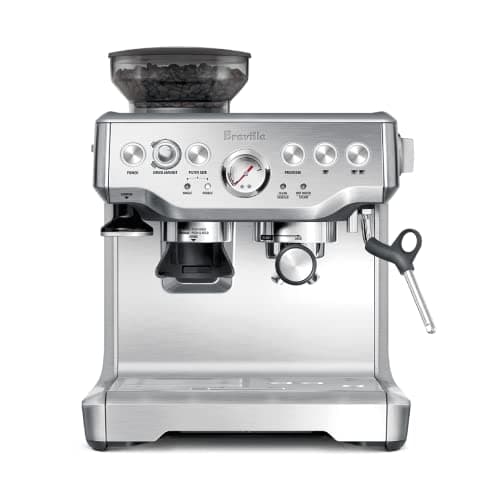
Breville Barista Express BES870XL
9.1 / 10
- Integrated conical burr grinder with dose control
- 54mm stainless steel portafilter
- Digital PID temperature control with low-pressure pre-infusion
- Manual microfoam steam wand
$699.95
Breville
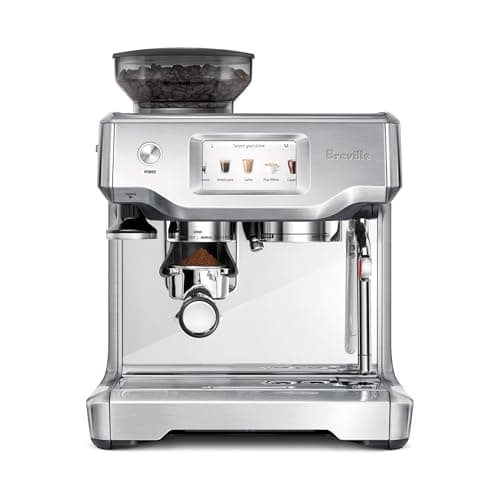
Breville Barista Touch BES880BSS
9.0 / 10
- Touchscreen with 5 preset cafe favorites and 8 saved custom coffees
- Automatic microfoam milk texturing (hands-free steam wand)
- ThermoJet heating — extraction temperature in about 3 seconds
- Integrated conical burr grinder with dose control; 54mm portafilter
$987.99
The Short Answer
Buy the Breville Barista Express (around $700) unless you specifically want the Barista Touch's three additions: automatic milk texturing, a touchscreen with saved drink profiles, and near-instant ThermoJet heating. The two machines share the same built-in conical burr grinder, 54mm portafilter, and PID temperature control, so shot quality is comparable — the premium on the Touch (just under $1,000) buys convenience and speed, not a fundamentally better espresso. If a latte-drinking household wants hands-free milk and one-touch drinks, the Touch earns its price; for most buyers, the Express is the better value.
Every product on this list has been scored against the Kitchen Gear Score, a weighted composite of expert consensus, performance, build quality, everyday usability, and value. Review method: Editorial synthesis of test-kitchen and appliance-lab reviews (Serious Eats, Wirecutter, CNET, Tom's Guide) and Breville's manufacturer specifications, verified against the current Amazon listings for both machines. No first-hand lab testing — our role is to synthesize what expert sources and manufacturer documentation already agree on. Every spec was cross-checked against the live product listing on the check date.. Synthesized from 5+ expert sources.
The Short Version
The Breville Barista Express and Barista Touch are the same espresso machine at their core, separated by three convenience features and a few hundred dollars. That gap is not a fixed number: across recent checks it has run anywhere from roughly $250 to $450, because the Express moves around its own range far more than the Touch does. Both use the same integrated conical burr grinder, the same 54mm portafilter, and the same PID temperature control — the three things that actually determine how your espresso tastes. So this comparison is not really about shot quality, which is comparable. It is about whether you want to pay for automatic milk texturing, a touchscreen with saved drink profiles, and near-instant heating.
This page is editorial synthesis, not first-hand lab testing. KitchenGearHQ does not run a testing lab — every spec here was drawn from Breville's own product listings for the BES870XL and BES880BSS, cross-referenced against test-kitchen and appliance-lab coverage (Serious Eats, Wirecutter, CNET, Tom's Guide), and verified against the live Amazon listings on the check date.
What The Two Machines Share
Before the differences, it is worth being clear about how much is identical, because it is the crux of the value question. Per Breville's listings, both the Barista Express and Barista Touch include:
- The same integrated conical burr grinder with dose control, grinding fresh straight into the portafilter.
- The same 54mm portafilter and Breville's included baskets.
- The same PID digital temperature control, holding brew-water temperature steady shot to shot.
- The same 67 oz water tank and 1/2 lb bean hopper.
Because espresso quality is overwhelmingly a function of fresh grinding, portafilter/basket, and temperature stability, these shared components mean the shot you can pull on each machine is effectively the same. Nobody should expect the Touch to make objectively better espresso than the Express — and the expert coverage of both machines reflects that.
What The Barista Touch Adds
The premium buys three things, all documented in the Barista Touch listing:
- Automatic milk texturing. The Express uses a manual steam wand — you texture microfoam by hand. The Touch's automatic wand heats and textures milk to a set level for you, hands-free. This is the single biggest day-to-day difference for anyone who drinks lattes or cappuccinos.
- A touchscreen with saved profiles. The Touch stores 5 pre-programmed cafe favorites and up to 8 custom saved coffees, so each person in a household can save their drink and pull it in one touch. The Express uses a dial and buttons.
- ThermoJet heating. The Touch reaches extraction temperature in about 3 seconds per the listing, versus a standard warm-up on the Express.
The Touch also carries a longer 2-year warranty (versus 1 year on the Express) and draws 1680 watts to the Express's 1600.
Which Should You Buy?
Buy the Barista Express if: you want the best value, you mostly drink straight espresso, or you actively want to learn to texture milk by hand. You get the same grinder, portafilter, and PID — the parts that make the espresso — for hundreds less, on a simpler machine that is easier to service. For most buyers, this is the right call, and it is the top-ranked machine in the best espresso machine under $700 guide.
Buy the Barista Touch if: a latte-drinking household wants hands-free milk, one-touch saved drinks for several people, and near-instant heat — and the budget is there. Those conveniences are real and get used every morning; if they match your routine, the premium is justified. If they do not, you are paying for features you will not use.
Head-to-Head Comparison
| Feature | Breville Barista Express BES870XL | Breville Barista Touch BES880BSS |
|---|---|---|
| Kitchen Gear Score | 9.1 | 9.0 |
| Price band | Around $700 | Just under $1,000 |
| Built-in grinder | Yes (conical burr) | Yes (conical burr) |
| Portafilter | 54mm | 54mm |
| Temperature control | PID | PID |
| Heating | Standard heat-up | ThermoJet (~3 seconds) |
| Milk steaming | Manual wand | Automatic wand |
| Interface | Dial and buttons | Touchscreen + saved profiles |
| Warranty | 1 year | 2 years |
| Best for | Value; learning to steam by hand | One-touch drinks; hands-free milk |
| Check Price | Amazon | Amazon |
$699.95
- Integrated conical burr grinder with dose control
- 54mm stainless steel portafilter
- Digital PID temperature control with low-pressure pre-infusion
- Manual microfoam steam wand
- 67 oz water tank, 1/2 lb hopper, 1600 watts, 1-year warranty
The Barista Express is the value side of this comparison, and it shares far more DNA with the Touch than the gap between their prices suggests. Both machines are built around the same core: an integrated conical burr grinder, a 54mm portafilter, PID temperature control, and low-pressure pre-infusion — all documented in Breville's listing. That shared foundation is why shot quality between the two is comparable. The espresso you can pull is a function of the grinder, the portafilter, and temperature stability, and on those three the machines are effectively matched.
Where the Express asks more of you is milk and interface. Its steam wand is manual — you texture microfoam by hand, per the listing — and you control the machine with a dial and buttons rather than a screen. For a lot of buyers that is a feature, not a compromise: hand-texturing milk is the skill people picture when they imagine "making espresso at home," and the manual workflow is simple and repairable. The trade-off is a genuine learning curve on milk, and a standard heat-up wait rather than the Touch's near-instant ThermoJet start.
The honest case for the Express is straightforward: it does the hard part of espresso — grinding fresh and holding temperature — exactly as well as the Touch, for hundreds of dollars less. What you give up is convenience: automatic milk, saved drink profiles, and speed. If those conveniences do not change your daily routine, the Express is the smarter buy, and it is our overall best espresso machine under $700 in the best espresso machine under $700 guide.
What We Love
- Same grinder, 54mm portafilter, and PID as the Touch for hundreds less
- Manual steam wand teaches real milk-texturing technique
- Simple dial-and-button interface is easy to service and understand
- Deep accessory and how-to ecosystem — among the most-documented home machines
- Comparable shot quality to the pricier Touch
What Could Be Better
- Manual milk texturing is a learning curve if you mainly drink lattes
- Standard heat-up wait — no near-instant ThermoJet start like the Touch
- No touchscreen or saved drink profiles
- Shorter 1-year warranty versus the Touch's 2 years
The Verdict
The better value and the right pick for most buyers. Choose it unless you specifically want automatic milk texturing, a touchscreen, and ThermoJet speed — in which case the Barista Touch is the upgrade.
Sources
- Breville (Amazon product listing, BES870XL): Integrated conical burr grinder with dose control; 54mm stainless portafilter; digital temperature control (PID); low-pressure pre-infusion; manual microfoam steam wand; 1/2 lb bean hopper; 67 oz water tank; 1600 watts; 1-year limited warranty
- Wirecutter: Long-running pick in Wirecutter's home espresso coverage; the integrated grinder and manual steam wand are why it's treated as the value entry into grind-and-brew espresso
- Serious Eats: Serious Eats' espresso coverage frames the Barista Express as the all-in-one that teaches manual milk texturing and dialing-in without a separate grinder
- CNET: Reviewed by CNET among home espresso machines; PID temperature control and the built-in grinder are the features it calls the practical differentiators at the price
$987.99
- Touchscreen with 5 preset cafe favorites and 8 saved custom coffees
- Automatic microfoam milk texturing (hands-free steam wand)
- ThermoJet heating — extraction temperature in about 3 seconds
- Integrated conical burr grinder with dose control; 54mm portafilter
- Digital PID temperature control; 1680 watts; 2-year warranty
The Barista Touch is the same machine at its core — same integrated conical burr grinder, same 54mm portafilter, same PID temperature control per Breville's listing — with three additions that define the experience and the price. First, ThermoJet heating: the listing puts it at about 3 seconds to extraction temperature, versus the standard warm-up on the Express. Second, automatic milk texturing: where the Express makes you steam by hand, the Touch's auto steam wand heats and textures milk to a set level for you. Third, the touchscreen, which stores 5 preset cafe favorites and up to 8 custom saved coffees, so a household can each save their own drink and pull it in one touch.
Those three features are the entire value proposition of the premium. They do not make the espresso itself better — the shot-quality hardware is shared — but they change what it is like to live with the machine. For a household where several people want different milk drinks on a weekday morning, the combination of instant heat, hands-free milk, and one-touch saved profiles genuinely removes friction. It is the difference between "making espresso" as a hobby and "getting my latte" as a routine.
The honest trade-offs: it is a few hundred dollars more — a gap that has narrowed as the Express has drifted up its own range, which strengthens the Touch's case rather than weakening it — and the automatic milk texturing that beginners love gives enthusiasts less control than a manual wand once their skills grow. The touchscreen is one more electronic component that can eventually fail, which is worth weighing against the Express's simpler, more serviceable design (the Touch's 2-year warranty versus the Express's 1-year partly offsets this). Buy the Touch if the convenience trio matters to your daily routine; if it does not, you are paying for features you will not use, and the Express is the better value.
What We Love
- Automatic milk texturing — café microfoam with no hand-steaming skill
- Touchscreen stores 5 presets plus 8 custom drinks for one-touch pulls
- ThermoJet heating reaches temperature in about 3 seconds
- Same grinder, 54mm portafilter, and PID as the Express — comparable shots
- Longer 2-year warranty
What Could Be Better
- Hundreds more than the Express for convenience, not better espresso
- Automatic milk wand gives enthusiasts less control than a manual one
- Touchscreen adds an electronic component that can eventually fail
- Overkill if you mostly drink straight espresso or don't mind hand-steaming
The Verdict
Worth the premium only if you specifically want automatic milk texturing, a touchscreen with saved profiles, and instant heat. Same-quality shots as the Express — you are paying for convenience and speed, not a better espresso.
Sources
- Breville (Amazon product listing, BES880BSS): Integrated conical burr grinder with dose control; ThermoJet heating reaches extraction temperature in 3 seconds; digital temperature control (PID); automatic microfoam milk texturing; touchscreen with 5 pre-programmed cafe favorites and up to 8 saved custom coffees; 54mm portafilter; 67 oz water tank; 1/2 lb hopper; 1680 watts; 2-year limited warranty
- CNET: Reviewed by CNET among Breville's premium home machines; the touchscreen guidance and automatic milk texturing are the features it highlights as the step up from the Barista Express
- Tom's Guide: Covered by Tom's Guide among the best espresso machines; the saved drink profiles and hands-free milk texturing are what it points to for households that want one-touch café drinks
- Serious Eats: Serious Eats' espresso coverage includes the Barista Touch among Breville's touchscreen machines; the automatic milk texturing and saved drink profiles are the conveniences it flags as the step up from the manual Barista Express
How We Score
Formula
Kitchen Gear Score = (Expert Consensus x 0.30) + (Espresso Performance x 0.25) + (Build Quality & Durability x 0.20) + (Ease of Use x 0.15) + (Value x 0.10), on a 0-10 scale.
Score Factors
- Expert Consensus · 30%
- Agreement across test kitchens and appliance labs — Serious Eats, Wirecutter, CNET, and Tom's Guide. Both Breville machines are broadly recommended, which is why they score closely on this factor.
- Espresso Performance · 25%
- Shot-quality drivers in the manufacturer specs: the shared conical burr grinder, 54mm portafilter, and PID temperature control mean the two machines are effectively matched on the espresso itself.
- Build Quality & Durability · 20%
- Materials, serviceability, and warranty. The Touch's added touchscreen is one more electronic component; the Express's simpler design is easier to service, which — together with its Value edge — is what keeps the Express fractionally ahead overall (9.1 vs 9.0) despite the Touch winning Ease of Use. The Touch offsets partly with a longer 2-year warranty.
- Ease of Use · 15%
- Daily friction: the Touch wins clearly here with automatic milk texturing, saved profiles, and near-instant ThermoJet heating; the Express requires manual milk steaming and a standard warm-up.
- Value · 10%
- Cost relative to what you get. The Express scores higher because it delivers comparable shot quality for hundreds less; the Touch's premium buys convenience rather than a better extraction.
| Rank | Product | Score |
|---|---|---|
| #1 | Breville Breville Barista Express BES870XL | 9.1 |
| #2 | Breville Breville Barista Touch BES880BSS | 9.0 |
Frequently Asked Questions
- Does the Barista Touch make better espresso than the Barista Express?
- No — the espresso itself is comparable. Both machines use the same integrated conical burr grinder, the same 54mm portafilter, and the same PID temperature control, which are the components that determine shot quality. The Touch's premium buys convenience features (automatic milk, touchscreen, faster heating), not a better extraction.
- Is the Barista Touch worth the step up?
- Only if you will use its three additions: automatic milk texturing, the touchscreen with saved drink profiles, and ThermoJet near-instant heating. For a busy latte-drinking household, those remove real daily friction and justify the price. If you mostly drink straight espresso or don't mind steaming milk by hand, the Express is the better value.
- What is the biggest practical difference between them?
- Milk. The Express has a manual steam wand — you texture microfoam yourself, which is a learnable skill. The Touch textures milk automatically to a set level, hands-free. If nobody in your household wants to learn milk steaming, that difference alone can justify the Touch.
- How much faster is the Barista Touch to heat up?
- The Touch uses Breville's ThermoJet system, which its listing rates at about 3 seconds to extraction temperature. The Barista Express uses a standard heating system with a normal warm-up wait. In practice the Touch is ready essentially as soon as you are; the Express needs a short warm-up first.
- Do both machines need a separate grinder?
- No — both have a conical burr grinder built in, so each is a complete grind-and-brew machine out of the box. That built-in grinder is a big part of why both are recommended as all-in-one home espresso setups.
- Is there a cheaper Breville that steams milk automatically like the Touch?
- Yes — the Breville Bambino Plus (around $500) also has an automatic steam wand and ThermoJet heating, but it drops the built-in grinder to shrink the footprint, so you'd add a separate grinder. It's ranked in our best espresso machine under $700 guide if hands-free milk on a smaller budget is the priority.
- Are the prices on this page MSRP or sale prices?
- Neither. The figure on each product card comes from our automated Amazon buy-box snapshot, refreshed weekly, so it is what the machine is actually selling for rather than a manufacturer's list price or a number typed into this article months ago. That is also why the ranges in the body copy are written wide. The Express in particular has moved a long way inside its band since we first ranked these two, and both machines get discounted during major sale events, so any figure written into a sentence here would be stale within weeks.
Bottom Line
Buy the Breville Barista Express (around $700) for the better value — the same grinder, 54mm portafilter, and PID as the Touch, with a manual steam wand you texture by hand.
Buy the Breville Barista Touch (just under $1,000) only if you specifically want its three additions: automatic milk texturing, a touchscreen with saved drink profiles, and near-instant ThermoJet heating.
Shot quality is comparable between the two — the premium buys convenience and speed, not a fundamentally better espresso.
If $700 is your ceiling, the Express has been sitting right on that line rather than comfortably under it — it is ranked, with the rest of our sub-$700 picks, in our best espresso machine under $700 guide.
Sources & Methodology
Methodology
Kitchen Gear Score = (Expert Consensus x 0.30) + (Espresso Performance x 0.25) + (Build Quality & Durability x 0.20) + (Ease of Use x 0.15) + (Value x 0.10), on a 0-10 scale.
Expert review sources
- Serious Eats — espresso machine equipment coverage
- Wirecutter — best espresso machine roundups
- CNET — home espresso machine reviews
- Tom's Guide — best espresso machines coverage
- Breville — BES870XL and BES880BSS manufacturer specification listings
Community sources
- r/espresso — Barista Express vs Barista Touch ownership threads
Prices and specs verified July 19, 2026.
KitchenGearHQ is a participant in the Amazon Services LLC Associates Program. We may earn commissions from qualifying purchases — at no extra cost to you.