Espresso Machines
Best Espresso Machine Under $700 (2026)
Under $700 buys real home espresso — 54mm/58mm portafilters, PID temperature control, and proper steam wands. We ranked five machines from roughly $300 to $700 against expert consensus and manufacturer specs, from the all-in-one Barista Express to the prosumer Gaggia Classic Evo Pro.
By Nick Miles · Updated August 18, 2026 · 13 min read
KitchenGearHQ is reader-supported. We may earn a commission from qualifying Amazon purchases at no extra cost to you.
Evidence at a Glance
Breville Barista Express BES870
The all-in-one under-$700 default: integrated conical burr grinder, PID temperature control, and a 54mm portafilter in a single appliance.
Sources: Wirecutter, Serious Eats, CNET
Verified Aug 18, 2026
Gaggia Classic Evo Pro
The enthusiast pick: solid-steel Italian build, commercial 58mm portafilter, and a three-way solenoid — the classic upgrade platform.
Sources: Home Barista, Serious Eats, CoffeeGeek
Verified Jul 19, 2026
Breville Bambino Plus BES500BSS
The fast, compact pick: ThermoJet heating hits temperature in about 3 seconds and the auto steam wand textures milk hands-free — in a 7.7-inch-wide body.
Sources: Wirecutter, Serious Eats, Tom's Guide
Verified Jul 19, 2026
Our Picks
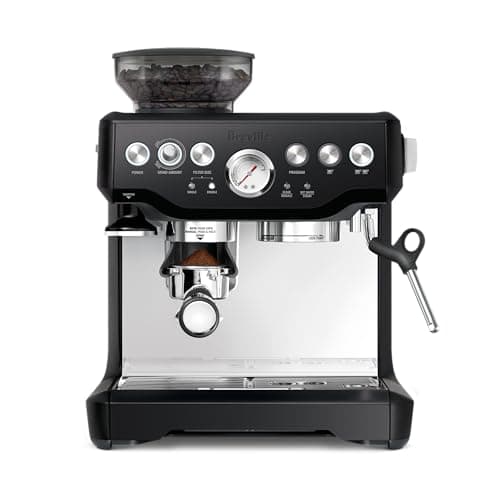
Breville
Breville Barista Express BES870
9.1 / 10
- Integrated precision conical burr grinder with dose control
- 54mm stainless steel portafilter
- Digital PID temperature control with low-pressure pre-infusion
- Manual microfoam steam wand for hand-textured milk
$699.95
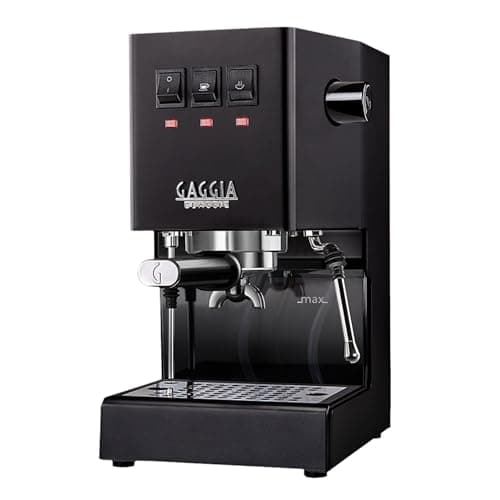
Gaggia
Gaggia Classic Evo Pro
8.7 / 10
- Solid steel housing, made in Italy
- Commercial 58mm stainless steel portafilter
- 9-bar espresso extractions
- Commercial three-way solenoid valve for a dry puck
$499.00
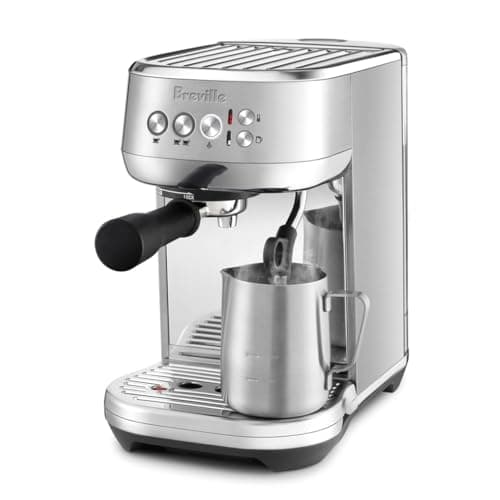
Breville
Breville Bambino Plus BES500BSS
8.6 / 10
- ThermoJet heating — extraction temperature in about 3 seconds
- Automatic microfoam milk texturing (hands-free steam wand)
- Digital PID temperature control
- 54mm portafilter, 19-gram dose
$485.00
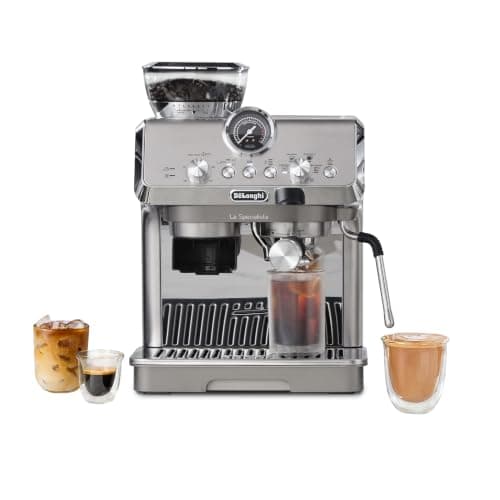
De'Longhi
De'Longhi La Specialista Arte Evo
8.4 / 10
- Built-in conical burr grinder with 8 grind settings
- 15-bar Italian pump, 9-bar extraction pressure
- Active Temperature Control with 3 infusion temperatures
- 4 presets: Espresso, Americano, Cold Brew, Hot Water
$499.95
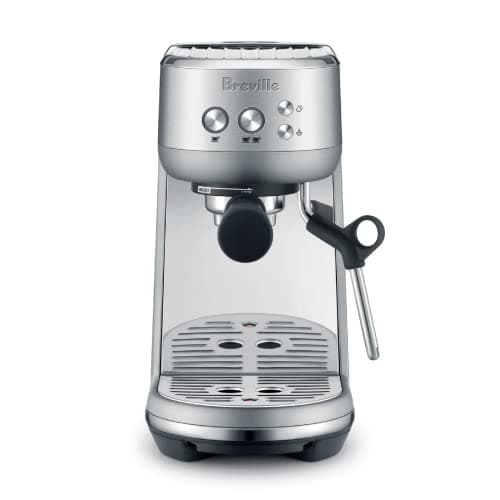
Breville
Breville Bambino BES450BSS
8.3 / 10
- 54mm portafilter, 19-gram dose — same format as the Bambino Plus
- Automatic microfoam milk texturing
- ThermoJet heating — extraction temperature in about 3 seconds
- Low-pressure pre-infusion and digital PID temperature control
$299.95
The Short Answer
For most buyers, the Breville Barista Express (around $700) is the best espresso machine under $700: it's the rare all-in-one with a built-in conical burr grinder, PID temperature control, and a 54mm portafilter, so you can go from beans to a real shot on one countertop appliance. It sits at the very top of this guide's budget, so read the value case below before assuming it is the right call for you. If you already own a grinder — or plan to buy one — the Gaggia Classic Evo Pro (around $500) is the enthusiast pick with a commercial 58mm portafilter and a repairable steel build. For the fastest, most compact setup, the Breville Bambino Plus (around $500) heats in about 3 seconds and textures milk automatically; the Bambino (around $300) is the budget entry.
Every product on this list has been scored against the Kitchen Gear Score, a weighted composite of expert consensus, performance, build quality, everyday usability, and value. Review method: Editorial synthesis of appliance-lab and food-media reviews (Serious Eats, Wirecutter, CNET, Tom's Guide, The Spruce Eats), espresso-specialist coverage (Home Barista, CoffeeGeek), and manufacturer specifications verified against current Amazon listings. No first-hand lab testing — our role is to synthesize what expert sources and manufacturer documentation already agree on. Every spec on this page was cross-checked against the live product listing on the check date.. Synthesized from 7+ expert sources.
Why $700 Is the Home-Espresso Sweet Spot
Under $700 is the price band where home espresso stops being a compromise. Below roughly $250 you are mostly buying pod machines or pressurized-basket devices that simulate crema rather than pull a genuine extraction. Above $700 you move into dual-boiler and prosumer territory that most first-time buyers do not need. In between sits the range covered here: machines with real 54mm or 58mm portafilters, digital or active temperature control, and steam wands capable of latte-grade microfoam.
The picks on this page are editorial synthesis, not first-hand lab testing. KitchenGearHQ does not run a testing lab — every machine here was selected by cross-referencing appliance-lab and food-media reviews (Serious Eats, Wirecutter, CNET, Tom's Guide, The Spruce Eats), espresso-specialist coverage (Home Barista, CoffeeGeek), and each manufacturer's own specifications, then verifying those specs against the current Amazon listing on the check date. The prices on the product cards come from our automated buy-box snapshot rather than from figures typed into this article, which is why the ranges written in the body copy are deliberately wide. Where expert sources agree — and on machines this widely reviewed, they largely do — we report the consensus. Where they diverge, we describe the trade-off and let you decide.
The single biggest decision in this range is whether the grinder is built in. Two picks (the Barista Express and the La Specialista Arte Evo) include a burr grinder; the other three expect you to buy one separately. That one fact changes the real cost more than any spec on the box, which is why our Kitchen Gear Score weighs it directly under both Ease of Use and Value.
The Kitchen Gear Score, Explained
Every product on KitchenGearHQ carries a Kitchen Gear Score — a single 0–10 composite that makes our ranking auditable instead of a vibe. For espresso machines under $700 it is calculated as:
Kitchen Gear Score = (Expert Consensus × 0.30) + (Espresso Performance × 0.25) + (Build Quality & Durability × 0.20) + (Ease of Use × 0.15) + (Value × 0.10)
- Expert Consensus (30%) — how strongly independent test kitchens, appliance labs, and espresso specialists converge on the machine.
- Espresso Performance (25%) — the shot-quality drivers in the manufacturer specs: temperature stability, pre-infusion, extraction pressure, and steam power.
- Build Quality & Durability (20%) — materials, portafilter format, boiler design, and the depth of the repair/mod community.
- Ease of Use (15%) — grinder-included vs separate, automatic vs manual milk texturing, and heat-up time.
- Value (10%) — total cost to a real shot, including whether you must add a grinder.
The scores in the comparison table above are the output of that formula. The Barista Express leads at 9.1 because it pairs a built-in grinder with the most forgiving learning curve and the deepest support ecosystem here — strong Ease of Use and Espresso Performance without a separate-grinder cost. The De'Longhi La Specialista Arte Evo also grinds in-box but sits lower on a newer, thinner accessory ecosystem, while the Gaggia Classic Evo Pro trades Ease of Use points for a Build Quality edge that enthusiasts value.
Built-In Grinder vs Separate Grinder: The Real Cost
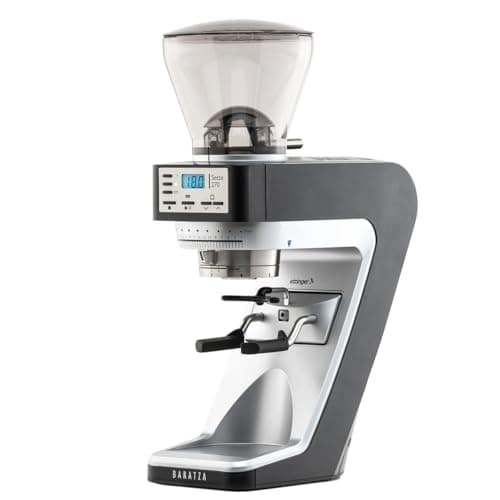
The sticker price is not the price of a shot. A machine without a grinder needs one, and a burr grinder good enough for espresso — where grind adjustment is fine and consistent — generally starts around $150 and climbs quickly. That reframes the lineup:
- Barista Express (~$700, grinder included) — one purchase, one countertop appliance, done. It is also the most expensive way to do that here, and it uses the whole $700 budget on its own.
- La Specialista Arte Evo (~$500, grinder included) — also one box, with presets and a cold-brew mode, and a band below the Barista Express for the same grind-and-brew job.
- Bambino Plus (
$500) + grinder ($150+) — closer to $650–$700 all in, but far more compact. - Gaggia Classic Evo Pro (
$500) + grinder ($150+) — around $650+ all in, and the platform enthusiasts grow into. - Bambino (
$300) + grinder ($150+) — the lowest all-in entry, roughly $450+.
If you want the least friction and the fewest decisions, an all-in-one wins. If you value upgradability and a commercial portafilter, buying the machine and grinder separately is the enthusiast path — and it lets you upgrade the grinder later without replacing the machine.
Manual vs Automatic Milk Texturing
The other fork in this lineup is how you make milk drinks. The Barista Express and Gaggia use manual steam wands: you texture the milk yourself, which is a genuine skill but also the one most people find satisfying to learn. The Bambino Plus and Bambino automate it — their listings document an automatic microfoam function that heats and textures milk to a set level hands-free. The De'Longhi uses a commercial-style manual wand.
If you mainly drink straight espresso or want to learn latte art, a manual wand is the right call. If your household runs on lattes and cappuccinos and nobody wants a steaming learning curve, the automatic wand on the Bambino machines is the feature that will actually get used every morning.
Head-to-Head Comparison
| Feature | Breville Barista Express BES870 | Gaggia Classic Evo Pro | Breville Bambino Plus BES500BSS | De'Longhi La Specialista Arte Evo | Breville Bambino BES450BSS |
|---|---|---|---|---|---|
| Kitchen Gear Score | 9.1 | 8.7 | 8.6 | 8.4 | 8.3 |
| Price band | Around $700 | Around $500 | Around $500 | Around $500 | Around $300 |
| Built-in grinder | Yes (conical burr) | No | No | Yes (conical burr) | No |
| Portafilter | 54mm | 58mm commercial | 54mm | Built-in (guided) | 54mm |
| Temperature control | PID | None (mod-friendly) | PID | Active Temp Control | PID |
| Milk steaming | Manual wand | Manual wand | Automatic | Commercial-style wand | Automatic |
| Best for | All-in-one default | Enthusiasts / upgraders | Compact + fast | Presets + cold brew | Tight budget |
| Watch-out | Single heater; consumer 54mm | No grinder or PID | No grinder; small tank | Preset-led; newer platform | 1-yr warranty; basic wand |
| Check Price | Amazon | Amazon | Amazon | Amazon | Amazon |
$699.95
- Integrated precision conical burr grinder with dose control
- 54mm stainless steel portafilter
- Digital PID temperature control with low-pressure pre-infusion
- Manual microfoam steam wand for hand-textured milk
- 1/2 lb bean hopper, 67 oz water tank, 1600 watts
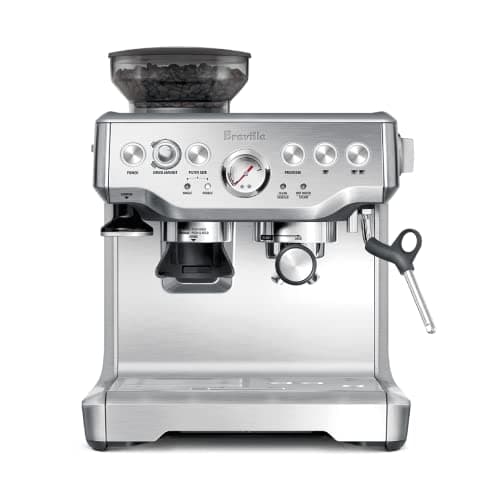
The Barista Express is the reason "best espresso machine under $700" usually starts here: it is the rare machine in this range that grinds and brews in one appliance. Breville's listing documents an integrated conical burr grinder with dose control, a 54mm stainless portafilter, and digital PID temperature control — which together mean you can put beans in the top, grind straight into the portafilter, and pull a real shot without buying a separate grinder first. That matters because a standalone burr grinder good enough for espresso generally starts around $150 and climbs from there; folding it into the machine is what makes this a genuine one-box starting point.
The features that expert reviewers keep returning to are the ones that shorten the learning curve. Low-pressure pre-infusion (per the manufacturer listing) ramps pressure gently at the start of the shot so the puck saturates evenly, and the PID keeps brew-water temperature steady shot to shot — the two variables beginners struggle with most on cheaper machines. The steam wand is manual, so you texture milk by hand; that is a skill to learn, but it is also the skill most people actually want when they buy an espresso machine.
The honest trade-offs: it is a single heating system, so there is a short wait switching from brewing to steaming (you can't do both at once like a dual-boiler), and the 54mm portafilter and included pressurized baskets are consumer-grade rather than the 58mm commercial format enthusiasts eventually chase. For most buyers that is the right call — the grinder-included convenience is worth more day to day than a wider portafilter. If you already own a grinder and want a more upgrade-friendly platform, see the Gaggia Classic Evo Pro at rank 2.
What We Love
- The rare all-in-one — built-in burr grinder means no separate grinder purchase
- PID temperature control keeps shot-to-shot temperature stable
- Low-pressure pre-infusion helps beginners pull even shots
- Grinds on demand straight into the 54mm portafilter
- Deep third-party support — baskets, tampers, and how-to coverage everywhere
What Could Be Better
- Single heating system — brief wait to switch between brewing and steaming
- 54mm consumer portafilter rather than the 58mm commercial format
- Integrated grinder is capable but a notch below a dedicated standalone espresso grinder
- Larger countertop footprint than the grinder-free Bambino machines
The Verdict
The default best espresso machine under $700 for most people. Buy it if you want one appliance that grinds and brews, with PID temperature control and a forgiving learning curve.
Sources
- Breville (Amazon product listing, BES870BTR): Integrated precision conical burr grinder with dose control; 54mm stainless portafilter; digital temperature control (PID); low-pressure pre-infusion; 1/2 lb bean hopper; 67 oz water tank; 1600 watts; 1-year limited warranty. Sold and shipped by Amazon.com, new, in stock, in the buy box on the check date — matching Breville's published list price.
- Wirecutter: Long-running pick in Wirecutter's home espresso coverage; the built-in grinder and per-shot dosing are what make it a complete first machine rather than a brew head that still needs a separate grinder
- Serious Eats: Covered in Serious Eats' espresso-machine equipment reviews as the enthusiast-friendly all-in-one that lets beginners learn dialing-in without buying a grinder first
- CNET: Reviewed by CNET among home espresso machines; the PID temperature control and integrated grinder are the features it flags as the practical differentiators at this price
$499.00
- Solid steel housing, made in Italy
- Commercial 58mm stainless steel portafilter
- 9-bar espresso extractions
- Commercial three-way solenoid valve for a dry puck
- Serviceable, heavily-modded upgrade platform
The Gaggia Classic Evo Pro is the enthusiast's answer under $700 — but read the label first: it has no built-in grinder. You budget for a separate burr grinder (figure $150 and up) on top of the machine. What you get for that is the thing the all-in-ones don't offer: a commercial 58mm stainless portafilter, a solid steel Italian-made housing, and a commercial three-way solenoid valve, all per Gaggia's listing. The 58mm format is the same portafilter diameter as professional café machines, so accessories, bottomless portafilters, and baskets are abundant, and the puck-prep skills you build transfer directly to higher-end gear.
The three-way solenoid valve is the spec enthusiasts single out. It vents the pressure off the coffee puck immediately after the shot, leaving a dry puck that knocks out cleanly instead of a wet, messy slurry — a feature normally reserved for pricier machines. The listing specifies 9-bar extraction and an uncoated aluminum boiler; that single boiler heats fast and, crucially, the machine's simple electromechanical design is why it has one of the deepest modification and repair communities in home espresso.
The honest trade-offs: it is manual in a way the Breville machines are not. There is no PID temperature control out of the box (temperature surfing or an aftermarket PID mod is how enthusiasts manage brew temperature), no digital dosing, and no grinder. It rewards a willingness to learn. If you want to plug in, grind, and pull a shot the same day with temperature handled for you, the Barista Express at rank 1 or the Bambino Plus at rank 3 are the better fit; if you want a machine you can grow into and repair for years, this is it.
What We Love
- Commercial 58mm portafilter — pro-format accessories and skills transfer
- Solid steel, Italian-made build designed to be serviced, not discarded
- Three-way solenoid valve gives a dry, cleanly-knocked puck
- Enormous owner, repair, and modification community
- Fast-heating single aluminum boiler
What Could Be Better
- No built-in grinder — budget for a separate burr grinder
- No PID temperature control from the factory (temperature-surf or mod it)
- Fully manual — steeper learning curve than the Breville machines
- Single boiler — no simultaneous brewing and steaming
The Verdict
The best espresso machine under $700 for enthusiasts who already own (or will buy) a grinder and want a serviceable, upgrade-friendly platform with a commercial portafilter.
Sources
- Gaggia (Amazon product listing, RI9380/49 Classic Evo Pro): Solid steel housing, made in Italy; 9-bar espresso extractions; stainless steel 58mm commercial portafilter; commercial three-way solenoid valve; uncoated aluminum boiler
- Home Barista: The Gaggia Classic line has one of the largest owner and modification communities on Home Barista; the 58mm commercial portafilter and serviceable design are why it's treated as a long-term upgrade platform rather than a disposable appliance
- Serious Eats: Serious Eats' espresso coverage has long pointed enthusiasts toward the Gaggia Classic as the entry into 'real' semi-automatic espresso with a commercial-format portafilter
- CoffeeGeek: Covered by CoffeeGeek as a benchmark entry-level prosumer machine; the three-way solenoid valve (which relieves puck pressure for a dry, cleanly-knocked puck) is a feature usually found on far pricier machines
$485.00
- ThermoJet heating — extraction temperature in about 3 seconds
- Automatic microfoam milk texturing (hands-free steam wand)
- Digital PID temperature control
- 54mm portafilter, 19-gram dose
- Compact 7.7-inch width; auto purge after steaming
The Bambino Plus is the pick when counter space and speed matter more than an integrated grinder. Breville's listing puts its width at 7.7 inches and its ThermoJet heat-up at about 3 seconds — meaning it goes from cold to pulling a shot faster than you can grind and dose. Like the Barista Express it uses a 54mm portafilter and PID temperature control, but it drops the built-in grinder to shrink the footprint, so you pair it with a separate grinder (or pre-ground coffee, though fresh grinding is where espresso quality lives).
Its signature feature is the automatic steam wand. Where the Barista Express and Gaggia make you texture milk by hand, the Bambino Plus's auto microfoam function heats and textures milk to a set level for you — the listing frames it as barista-quality microfoam without the technique. For someone who mostly drinks lattes and cappuccinos and doesn't want a milk-steaming learning curve, that is the whole value proposition. It also auto-purges the heating system after steaming so the next shot pulls at the right temperature.
Where it asks for compromise: no grinder (budget for one), and the compact body means a smaller water tank and drip tray, so you refill and empty more often than on the Barista Express. The automatic milk texturing, while convenient, gives you less control than a manual wand once your skills grow. If you want the grinder built in, go to rank 1; if you want to learn manual milk texturing on a serviceable platform, go to rank 2.
What We Love
- Near-instant ThermoJet heat-up (about 3 seconds per the listing)
- Automatic milk texturing — café microfoam without hand-steaming
- Compact 7.7-inch-wide footprint for tight countertops
- Same 54mm portafilter and PID temperature control as the Barista Express
- Auto-purge keeps the next shot at the right temperature
What Could Be Better
- No built-in grinder — budget for a separate burr grinder
- Smaller water tank and drip tray mean more frequent refills
- Automatic wand offers less control than a manual one as you improve
- No hot-water spout for Americanos like some larger machines
The Verdict
The best compact espresso machine under $700, and the fastest to heat. Buy it if counter space and hands-free milk texturing matter more than having the grinder built in.
Sources
- Breville (Amazon product listing, BES500BSS): ThermoJet heating system reaches extraction temperature in 3 seconds; digital temperature control (PID); automatic microfoam milk texturing; 54mm portafilter, 19g dose; 7.7-inch width; auto purge after steaming; 1560 watts; 2-year limited warranty
- Wirecutter: Recommended in Wirecutter's home espresso coverage as the compact pick for people who want café milk drinks without learning to steam by hand
- Serious Eats: Serious Eats' espresso coverage highlights the Bambino line's ThermoJet near-instant heat-up as the practical advantage over machines that need several minutes to warm up
- Tom's Guide: Listed by Tom's Guide among the best espresso machines for small kitchens; the 7.7-inch footprint and automatic milk texturing are the features it calls out
$499.95
- Built-in conical burr grinder with 8 grind settings
- 15-bar Italian pump, 9-bar extraction pressure
- Active Temperature Control with 3 infusion temperatures
- 4 presets: Espresso, Americano, Cold Brew, Hot Water
- Cold Extraction Technology developed with the SCA
The La Specialista Arte Evo is the all-in-one alternative to the Barista Express, and at around $500 it now sits well inside the under-$700 bracket rather than at the top of it. Like the Breville it folds a conical burr grinder into the machine, per De'Longhi's listing — 8 grind settings feeding directly into the portafilter — so it is a genuine grind-and-brew one-box setup. Where it diverges is in what it automates: the listing documents 4 presets (Espresso, Americano, Cold Brew, and Hot Water) and a guided dosing-and-tamping kit, aiming the machine at buyers who want more hand-holding than the Barista Express provides.
Two features stand out on the spec sheet. Active Temperature Control offers 3 selectable infusion temperatures, which the listing frames as a way to match brew temperature to different roast levels — useful once you start caring about which beans you buy. And the Cold Extraction Technology, developed with the Specialty Coffee Association per the listing, produces a cold brew in under five minutes rather than the usual overnight steep. The 15-bar Italian pump delivers the 9 bar of pressure espresso extraction actually uses.
The catch: while the presets and cold-brew mode add versatility, enthusiasts generally find the Barista Express's simpler, more manual workflow easier to dial in for a great straight espresso. It is also newer than the Barista Express, so the accessory and how-to ecosystem is thinner. Choose it if the cold-brew mode, guided prep, and presets genuinely appeal; choose the Barista Express at rank 1 if you want the deepest support and the more established platform for the same job.
What We Love
- Built-in grinder makes it a true grind-and-brew one-box machine
- Active Temperature Control lets you match temperature to the roast
- Cold Extraction Technology brews cold brew in minutes, not overnight
- Guided dosing-and-tamping kit smooths the beginner learning curve
- Presets for espresso, Americano, cold brew, and hot water
What Could Be Better
- You pay for presets and a cold-brew mode a straight-espresso drinker may never use
- Presets add versatility but a more automated, less hands-on shot workflow
- Newer platform — thinner accessory and how-to ecosystem than Breville
- Enthusiasts often prefer the simpler Barista Express for straight espresso
The Verdict
The best all-in-one alternative under $700 if you want a built-in grinder plus presets and a fast cold-brew mode. For the more established grind-and-brew platform, the Barista Express at rank 1 remains the safer pick.
Sources
- De'Longhi (Amazon product listing, La Specialista Arte Evo): Built-in conical burr grinder with 8 grind settings; 15-bar Italian pump delivering 9-bar extraction pressure; Active Temperature Control with 3 infusion temperatures; commercial-style steam wand; 4 presets (Espresso, Americano, Cold Brew, Hot Water); Cold Extraction Technology developed with the Specialty Coffee Association creates cold brew in less than five minutes
- CNET: De'Longhi's La Specialista line has been reviewed by CNET among all-in-one home espresso machines; the built-in grinder plus guided dosing-and-tamping kit is the beginner-friendly angle it highlights
- Tom's Guide: Covered by Tom's Guide among De'Longhi's premium home machines; the Active Temperature Control with selectable infusion temperatures is the feature it flags for dialing in different roasts
$299.95
- 54mm portafilter, 19-gram dose — same format as the Bambino Plus
- Automatic microfoam milk texturing
- ThermoJet heating — extraction temperature in about 3 seconds
- Low-pressure pre-infusion and digital PID temperature control
- Compact footprint; 1560 watts
The Bambino is the budget entry into real Breville espresso. At around $300 it keeps the parts that matter most — the listing confirms a 54mm portafilter, ThermoJet 3-second heat-up, PID temperature control, and low-pressure pre-infusion — the same core brewing setup as the Bambino Plus. What it trades away to hit the price is mostly at the edges rather than the shot: it is the entry model in the Bambino line, so you get a shorter (1-year) warranty and a more basic milk-texturing implementation than the Plus.
For a first espresso machine on a tight budget, this is the honest sweet spot. You are getting a genuine 54mm portafilter with PID temperature control — not a pod machine and not a pressurized-basket-only toy — for around $300. The automatic steam wand still textures milk for you, which is unusual at this price. Pair it with an inexpensive burr grinder and you have a legitimate espresso setup for well under the $700 ceiling, with plenty of budget left for beans and accessories.
What you give up at $300: no built-in grinder (as with the other Bambino), the smallest tank and tray here, a 1-year warranty versus the Plus's 2 years, and less refined automatic milk texturing than the Plus. If your budget can stretch, the Bambino Plus at rank 3 is the better long-term machine. But if $300 is the ceiling for the machine itself, this is the most espresso you can responsibly recommend at that number.
What We Love
- Genuine 54mm portafilter and PID temperature control near $300
- Automatic milk texturing is rare at this price
- ThermoJet near-instant heat-up like the pricier Bambino Plus
- Small footprint fits tight countertops and first kitchens
- Leaves plenty of budget for a grinder and beans under $700
What Could Be Better
- No built-in grinder — budget for a separate burr grinder
- Smallest water tank and drip tray in this guide
- 1-year warranty versus the Bambino Plus's 2 years
- More basic milk texturing than the Bambino Plus
The Verdict
The best budget espresso machine to start with. Buy it if $300 is your ceiling for the machine and you want a real 54mm portafilter with PID rather than a pod or pressurized-only starter.
Sources
- Breville (Amazon product listing, BES450BSS): 54mm portafilter, 19g dose; automatic microfoam milk texturing; ThermoJet heating reaches extraction temperature in 3 seconds; low-pressure pre-infusion; digital temperature control (PID); 1560 watts; 1-year limited warranty
- Serious Eats: Serious Eats' espresso coverage treats the Bambino as the lowest-cost way into a genuine 54mm-portafilter Breville with PID temperature control, rather than a pod or pressurized-only machine
- CNET: Reviewed by CNET among entry-level home espresso machines; the near-instant ThermoJet heat-up and small footprint are the practical strengths it notes at the price
- Tom's Guide: Included in Tom's Guide's best-espresso-machine coverage as a budget pick; automatic milk texturing on an entry-priced (around $300) machine is the standout it highlights
How We Score
Formula
Kitchen Gear Score = (Expert Consensus x 0.30) + (Espresso Performance x 0.25) + (Build Quality & Durability x 0.20) + (Ease of Use x 0.15) + (Value x 0.10), on a 0-10 scale.
Score Factors
- Expert Consensus · 30%
- Agreement across appliance labs, food media, and espresso specialists — Serious Eats, Wirecutter, CNET, Tom's Guide, The Spruce Eats, Home Barista, and CoffeeGeek. Weighted highest because a machine multiple independent expert sources converge on is the safest recommendation.
- Espresso Performance · 25%
- Shot quality drivers documented in the manufacturer specs: temperature stability (PID or active temperature control), pre-infusion, extraction pressure, and steam-wand capability for milk texturing.
- Build Quality & Durability · 20%
- Materials and serviceability — steel housings, portafilter format (54mm consumer vs 58mm commercial), boiler design, and the depth of the repair and modification community for long-term ownership.
- Ease of Use · 15%
- Learning curve and daily friction: built-in vs separate grinder, manual vs automatic milk texturing, heat-up time, and how forgiving the machine is for a first-time home barista.
- Value · 10%
- Total cost to a real shot — including whether a separate grinder is required — measured against the spec tier and expected lifespan, not the sticker price alone.
| Rank | Product | Score |
|---|---|---|
| #1 | Breville Breville Barista Express BES870 | 9.1 |
| #2 | Gaggia Gaggia Classic Evo Pro | 8.7 |
| #3 | Breville Breville Bambino Plus BES500BSS | 8.6 |
| #4 | De'Longhi De'Longhi La Specialista Arte Evo | 8.4 |
| #5 | Breville Breville Bambino BES450BSS | 8.3 |
Frequently Asked Questions
- What is genuinely the best espresso machine under $700?
- For most buyers, the Breville Barista Express, which sits around $700. It is the rare machine in this range with a built-in conical burr grinder, PID temperature control, and a 54mm portafilter, so it grinds and brews in one appliance without a separate grinder purchase. Two honest caveats at that price: it consumes this guide's entire $700 ceiling on its own, and enthusiasts who already own a grinder should look at the Gaggia Classic Evo Pro instead.
- Do I need a separate grinder?
- Only for three of the five picks. The Barista Express and De'Longhi La Specialista Arte Evo have grinders built in. The Gaggia Classic Evo Pro, Bambino Plus, and Bambino do not — budget roughly $150 or more for an espresso-capable burr grinder on top of the machine. For espresso, grinding fresh matters more than almost any other variable, so a grinder is not optional overall — it is just built into some machines and not others.
- Is the Gaggia Classic Evo Pro too advanced for a beginner?
- It is more manual than the Breville machines — no built-in grinder and no factory PID temperature control, so you learn to manage brew temperature (often via "temperature surfing" or an aftermarket PID mod). Motivated beginners do fine with it, and its commercial 58mm portafilter and huge repair community make it a machine you grow into rather than out of. If you want to plug in and pull a temperature-managed shot the same day, the Barista Express is friendlier.
- What is PID and does it matter?
- PID is a digital controller that holds the brew-water temperature steady shot to shot. It matters because temperature swings are one of the main reasons home shots taste inconsistent. The Barista Express, both Bambino machines, and (via its Active Temperature Control) the La Specialista offer temperature regulation; the Gaggia Classic Evo Pro does not from the factory, which is why enthusiasts often add a PID mod.
- Can these machines steam milk and pull a shot at the same time?
- No — none of the five are dual-boiler machines, so there is a brief wait to switch between brewing and steaming. Simultaneous brew-and-steam is a dual-boiler feature, and dual-boiler machines generally start above this $700 range. For a household making one or two drinks at a time, the switch-over wait is a minor inconvenience.
- Are the prices on this page MSRP or sale prices?
- Neither, exactly. Every figure on a product card comes from our automated Amazon buy-box snapshot, refreshed weekly, so it is what the machine is actually selling for rather than a manufacturer's list price or a number typed into this article months ago. A live Amazon price can sit above or below MSRP at any given moment — the Gaggia Classic Evo Pro has run above its $449 MSRP, while the De'Longhi has run well below its list — and espresso machines are discounted hard during major sale events. That is exactly why the ranges written into the body copy are deliberately wide: a figure quoted to the penny in durable prose is a figure that will be wrong by the time you read it.
- What about the Ninja Luxe Café — is it a real alternative to the Barista Express?
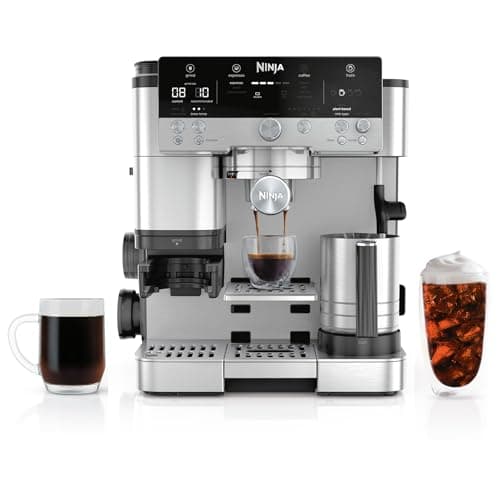
- Yes, and it is a genuinely different proposition rather than a cheaper copy. The Ninja Luxe Café Premier (ES601) grinds, doses by weight on a built-in scale, tamps with a spring-loaded lever and textures milk hands-free, and it also makes drip coffee and cold brew — for around $600, a band under the Barista Express. What you give up is the 54mm portafilter ecosystem: Ninja's group head is 53mm and CoffeeGeek confirms Breville baskets and aftermarket accessories do not fit it. The full comparison is in Ninja Luxe Café vs Breville Barista Express (2026).
- How does the Barista Express compare to the step-up Barista Touch?
- The Barista Touch adds a touchscreen, saved drink profiles, near-instant ThermoJet heating (versus the Express's standard warm-up), and automatic milk texturing — but it costs roughly $1,000, above this guide's $700 ceiling. Whether those conveniences justify the jump is the subject of our dedicated comparison: see Breville Barista Express vs Barista Touch (2026).
Bottom Line
Buy the Breville Barista Express if you want the best all-in-one under $700 — it is the rare machine that grinds and brews in one box, with PID temperature control and a forgiving learning curve.
Buy the Gaggia Classic Evo Pro if you already own or will buy a grinder and want a serviceable, upgrade-friendly enthusiast platform with a commercial 58mm portafilter.
Buy the Breville Bambino Plus if counter space and speed matter most — about 3-second heat-up and automatic milk texturing in a 7.7-inch footprint.
Buy the De'Longhi La Specialista Arte Evo if you want a built-in grinder plus presets and a fast cold-brew mode, and the Breville Bambino if $300 is your ceiling for the machine itself.
All articles in this guide
Ninja Luxe Café vs Breville Barista Express (2026)
Amazon's best-selling espresso machine meets the decade-old default. The Ninja Luxe Café Premier (around $600) automates milk, weighs its own dose and adds drip and cold brew; the Breville Barista Express (around $700) is espresso only, with a 54mm portafilter and a far deeper accessory ecosystem. Here is who each one is actually for.
12 min read
Breville Barista Express vs Barista Touch (2026)
The Barista Express (around $700) and Barista Touch (just under $1,000) share a grinder, a 54mm portafilter, and PID. The Touch adds ThermoJet heating, a touchscreen with saved profiles, and automatic milk texturing. We break down which Breville is actually worth the step up.
11 min read
Best Prosumer Espresso Machines: Dual Boiler & E61 Picks (2026)
Three prosumer espresso machines from around $1,700 to around $2,300 — the tier above our under-$700 guide, led by the Breville Dual Boiler (bundled with a Smart Grinder Pro) and the compact dual-boiler Rancilio Silvia Pro X.
9 min read
Sources & Methodology
Methodology
Kitchen Gear Score = (Expert Consensus x 0.30) + (Espresso Performance x 0.25) + (Build Quality & Durability x 0.20) + (Ease of Use x 0.15) + (Value x 0.10), on a 0-10 scale.
Expert review sources
- Serious Eats — espresso machine equipment coverage
- Wirecutter — best espresso machine roundups
- CNET — home espresso machine reviews
- Tom's Guide — best espresso machines coverage
- The Spruce Eats — espresso machine product reviews
- Home Barista — owner, repair, and modification community
- CoffeeGeek — prosumer espresso machine coverage
- Breville, Gaggia, De'Longhi — manufacturer specification listings
Community sources
- r/espresso — dialing-in, machine ownership, and upgrade-path threads
- Home Barista forums — Gaggia Classic modification and long-term ownership
Prices and specs verified July 19, 2026.
KitchenGearHQ is a participant in the Amazon Services LLC Associates Program. We may earn commissions from qualifying purchases — at no extra cost to you.