Espresso Machines
Best Compact Espresso & Coffee Setups for Small Kitchens (2026)
Small-kitchen espresso means picking between an automatic all-in-one footprint and a manual upgrade platform that needs its own grinder. We compared three compact-format picks — a 7.7-inch-wide automatic machine, a programmable grinder, and a manual prosumer machine — against expert consensus to find two real setups under and around $700.
By Nick Miles · Updated July 25, 2026 · 9 min read
KitchenGearHQ is reader-supported. We may earn a commission from qualifying Amazon purchases at no extra cost to you.
Evidence at a Glance
Breville Bambino Plus BES500BSS
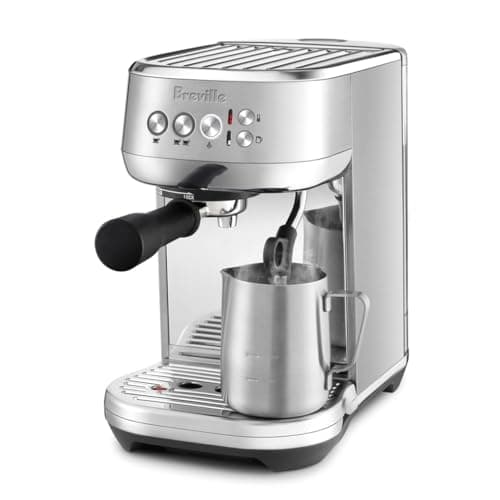
The narrowest full-featured pick here: a listing-documented 7.7-inch width, ThermoJet 3-second heat-up, and automatic milk texturing — no manual steam-wand skill required.
Sources: Wirecutter, Serious Eats, Tom's Guide
Verified Jul 25, 2026
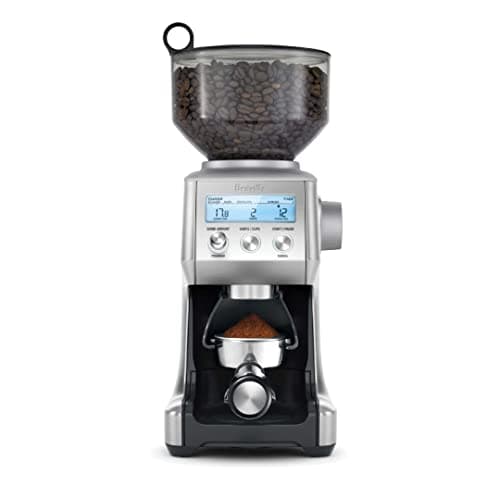
Breville Smart Grinder Pro BCG820BSS
The compact grinder pairing: 60 grind settings and a digital timer in a single-purpose countertop footprint that TechGearLab and CNET both ranked first for grinding consistency.
Sources: TechGearLab, CNET, CoffeeGeek
Verified Jul 25, 2026
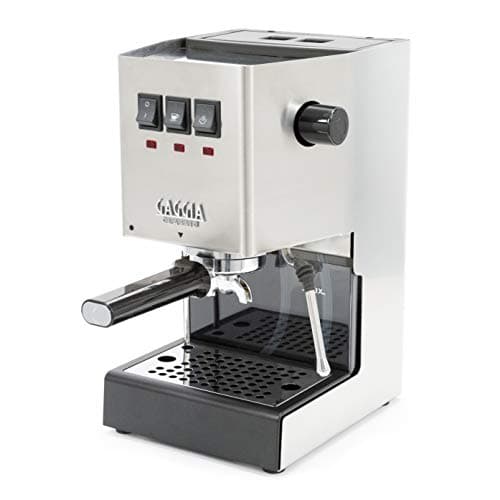
Gaggia RI9380/46 E24
The manual upgrade path: a solid-steel Classic-line body with a commercial 58mm portafilter — no built-in grinder, so budget for one separately, and no published footprint dimension on this listing.
Sources: Home Barista, CoffeeGeek
Verified Jul 25, 2026
Our Picks
Breville
Breville Bambino Plus BES500BSS
8.9 / 10
- 7.7-inch width — the narrowest full-featured pick in this guide
- ThermoJet heating — extraction temperature in about 3 seconds
- Automatic microfoam milk texturing (hands-free steam wand)
- Digital PID temperature control with low-pressure pre-infusion
$485.00
Breville
Breville Smart Grinder Pro BCG820BSS
8.6 / 10
- 60 grind settings spanning espresso to French press
- Dosing iQ digital timer in 0.2-second increments
- Dual portafilter forks for hands-free espresso dosing
- 18 oz bean hopper — single-purpose, counter-friendly footprint
$199.95
Gaggia
Gaggia RI9380/46 E24
7.2 / 10
- Solid steel housing, made in Italy
- Commercial 58mm stainless steel portafilter
- 9-bar espresso extractions
- Commercial three-way solenoid valve for a dry puck
$454.70
The Short Answer
For most small kitchens, the Breville Bambino Plus (around $500) is the best compact espresso machine — it's 7.7 inches wide per Breville's own listing, heats in about 3 seconds, and steams milk on its own, so you don't need to learn a manual wand. Pair it with the Breville Smart Grinder Pro (around $200), which TechGearLab and CNET both ranked first for grinding consistency, for a full automatic setup near $700. If you'd rather have a manual machine, the Gaggia RI9380/46 E24 (around $450) is the enthusiast's compact pick, and paired with the same grinder that setup runs about $650.
Every product on this list has been scored against the Kitchen Gear Score, a weighted composite of expert consensus, performance, build quality, everyday usability, and value. Review method: We synthesize appliance-lab and food-media reviews (Wirecutter, Serious Eats, CNET, Tom's Guide, TechGearLab, CoffeeGeek) along with manufacturer specs, since we don't run our own testing lab. Instead we report where expert sources and manufacturer documentation already agree, and we checked every spec, condition and stock status here against the live Amazon listing on the check date using the Amazon Creators API. Prices come from an automated buy-box snapshot rather than from figures typed into this article.. Synthesized from 7+ expert sources.
Small Kitchen, Real Trade-Off
A small kitchen doesn't remove the espresso decision — it sharpens it. Full-size, grinder-included, all-in-one machines like the Barista Express solve the footprint problem by folding the grinder into the machine, but that integration itself takes width. The alternative — a genuinely narrow machine plus a separate grinder — asks you to give up counter-space savings in exchange for the narrowest single-appliance body available, then find a small second footprint for the grinder next to it.
This guide covers that second path: the narrowest verified-footprint machine we could confirm live (the Bambino Plus, 7.7 inches wide per Breville's own listing), a compact, single-purpose grinder to pair with it, and a manual enthusiast alternative for buyers who'd rather have a serviceable upgrade platform than an automatic one. None of these three products were lab-tested by KitchenGearHQ directly — we cross-referenced appliance-lab and food-media reviews, espresso- and grinder-specialist coverage, and each listing's own specifications, verified live via the Amazon Creators API on the check date below.
The Kitchen Gear Score, Compact-Setup Edition
Every product on KitchenGearHQ carries a Kitchen Gear Score — a single 0–10 composite that makes our ranking auditable instead of a vibe. For compact small-kitchen setups, we weight it differently than our general espresso-machine coverage, because a small-kitchen buyer is solving for counter space and a short learning curve first, and raw shot quality second:
Kitchen Gear Score (Compact Setups) = (Expert Consensus × 0.25) + (Countertop Footprint × 0.25) + (Espresso/Grind Performance × 0.20) + (Setup Simplicity × 0.15) + (Value × 0.15)
- Expert Consensus (25%) — how strongly independent test kitchens, appliance labs, and specialist coverage converge on the product.
- Countertop Footprint (25%) — documented physical footprint where the listing states one, and whether a second appliance has to share the counter.
- Espresso/Grind Performance (20%) — the quality drivers in manufacturer specs and independent lab tests.
- Setup Simplicity (15%) — how much skill and how many separate purchases day one requires.
- Value (15%) — total cost to a real shot, including a mandatory grinder purchase where one isn't included.
The Bambino Plus leads at 8.9 on the strength of its listing-documented 7.7-inch width and automatic milk texturing — the combination that most directly answers "small kitchen." The Smart Grinder Pro follows close behind at 8.6, carried almost entirely by its lab-proven grinding consistency in a genuinely single-purpose footprint. The Gaggia RI9380/46 E24 scores lower here, at 7.2, specifically because this formula penalizes what its own listing doesn't offer: no built-in grinder (a mandatory second footprint), no published machine dimension to credit under Countertop Footprint, and no factory PID (lower Setup Simplicity) — trade-offs the general espresso-machine hub guide scores more gently because that guide isn't optimizing for counter space.
Two Real Compact Setups
The sticker price on a machine alone isn't the price of a working compact setup — you need a grinder either way, whether it's built in or bought separately. Here's what the two combinations in this guide actually cost, in the round numbers you should budget against:
- Automatic setup — Bambino Plus + Smart Grinder Pro: about $700. The narrowest footprint, the shortest learning curve, and a lab-proven grinder pairing. This is the default recommendation for most small kitchens.
- Manual/enthusiast setup — Gaggia RI9380/46 E24 + Smart Grinder Pro: about $650. A serviceable, upgrade-friendly platform for buyers who want to grow into manual temperature management. The Gaggia's own listing states no machine dimension, and total counter footprint grows once the grinder joins it.
Both setups land in the roughly $650-and-up range a genuine compact espresso setup costs once you stop pretending the grinder is optional. If your small kitchen genuinely can't spare a second appliance footprint at all, an all-in-one grinder-equipped machine like the Barista Express (covered in our best espresso machine under $700 guide) trades some width for a single-appliance solution — worth reading if the second footprint, not the total price, is your real constraint.
Automatic vs. Manual: Which Fits a Small Kitchen Better
The Bambino Plus and the Gaggia RI9380/46 E24 represent two different bets on what a small kitchen needs most. The Bambino Plus bets on speed and simplicity: ThermoJet heat-up in about 3 seconds, an automatic steam wand, and PID temperature control mean you can go from a cold kitchen to a finished latte with almost no learning curve, which matters more in a small first apartment where there's rarely room — literally or figuratively — for a hobby you have to practice.
The Gaggia RI9380/46 E24 bets the opposite way: it assumes you want to grow into the hobby. Its commercial 58mm portafilter and three-way solenoid valve are the same format and feature set that let enthusiasts modify and repair Gaggia Classic-line machines for years, per Home Barista's coverage of the lineup — but you manage temperature manually and buy a grinder separately, which is a real ask in a kitchen where every square inch of counter is already spoken for.
Neither is wrong. If you're furnishing a first kitchen or a dorm-adjacent apartment and coffee is one appliance among many competing for counter space, the automatic Bambino Plus setup is the safer default. If espresso is the appliance you're building the kitchen around, the Gaggia platform is the one you won't outgrow.
Head-to-Head Comparison
| Feature | Breville Bambino Plus BES500BSS | Breville Smart Grinder Pro BCG820BSS | Gaggia RI9380/46 E24 |
|---|---|---|---|
| Kitchen Gear Score | 8.9 | 8.6 | 7.2 |
| Price band | Around $500 | Around $200 | Around $450 |
| Documented footprint | 7.7" width (listing) | 18 oz hopper (listing) | Not stated in listing |
| Built-in grinder | No | — (is the grinder) | No |
| Temperature control | PID | N/A (grinder) | None (mod-friendly) |
| Milk steaming | Automatic | N/A (grinder) | Manual wand |
| Best for | Narrowest automatic setup | Pairing with either machine | Manual upgrade platform |
| Watch-out | Smaller tank; needs a grinder | Stepped, not stepless | No PID; naming caution above |
| Check Price | Amazon | Amazon | Amazon |
$485.00
- 7.7-inch width — the narrowest full-featured pick in this guide
- ThermoJet heating — extraction temperature in about 3 seconds
- Automatic microfoam milk texturing (hands-free steam wand)
- Digital PID temperature control with low-pressure pre-infusion
- 54mm portafilter, 19-gram dose; auto-purge after steaming
Small-kitchen espresso starts with a width number, and Breville's own listing gives you one: 7.7 inches. That's the Bambino Plus's whole pitch — it keeps the PID temperature control and low-pressure pre-infusion of the pricier Barista-series machines, but it drops the built-in grinder to shrink the body down to a size that fits a narrow apartment counter or a shelf over a mini-fridge.
It doesn't drop automation, though. The listing documents an automatic steam wand that adjusts milk temperature and texture for you — Breville calls this hands-free microfoam — and that matters more in a small kitchen than it sounds, since a manual wand takes counter-side elbow room and a learning curve most first-apartment buyers don't have time for. ThermoJet heating also hits extraction temperature in about 3 seconds per the listing, so there's no multi-minute warm-up eating into a tight morning routine.
The honest trade-off: no built-in grinder, so you'll pair it with a separate one (see the Smart Grinder Pro at rank 2), and the compact body means a smaller water tank than the full-size Barista-series machines, so you'll refill more often. If you want the narrowest automatic footprint here and don't mind adding a grinder, this is the default pick. If you'd rather have a manual upgrade platform, see the Gaggia RI9380/46 E24 at rank 3.
What We Love
- Listing-documented 7.7-inch width — the narrowest pick in this guide
- Automatic milk texturing — no manual steam-wand skill required
- ThermoJet heat-up in about 3 seconds, per the listing
- Digital PID temperature control at a compact-machine price
- Auto-purge keeps the next shot at the right temperature
What Could Be Better
- No built-in grinder — budget for a separate one
- Smaller water tank and drip tray than full-size Barista-series machines
- Automatic wand offers less control than a manual one as your skills grow
- No hot-water spout for Americanos like some larger machines
The Verdict
The best compact espresso machine for a small kitchen. Buy it if a narrow, listing-verified footprint and hands-free milk texturing matter more than having the grinder built in.
Sources
- Breville (Amazon product listing, BES500BSS): COMPACT FOOTPRINT: 'Espresso machine with a width of 7.7 inches, the Bambino Plus easily fits on your countertop'; ThermoJet heating reaches extraction temperature in 3 seconds; automatic microfoam milk texturing; digital PID temperature control; 54mm portafilter, 19g dose; low-pressure pre-infusion; auto purge after steaming; 1560 watts; 2-year limited warranty
- Wirecutter: Recommended in Wirecutter's home espresso coverage as the compact pick for people who want café milk drinks without learning to steam by hand
- Serious Eats: Serious Eats' espresso coverage highlights the Bambino line's ThermoJet near-instant heat-up as the practical advantage over machines that need several minutes to warm up
- Tom's Guide: Listed by Tom's Guide among the best espresso machines for small kitchens; the 7.7-inch footprint and automatic milk texturing are the features it calls out
$199.95
- 60 grind settings spanning espresso to French press
- Dosing iQ digital timer in 0.2-second increments
- Dual portafilter forks for hands-free espresso dosing
- 18 oz bean hopper — single-purpose, counter-friendly footprint
- Stainless steel conical burrs
A compact espresso machine still needs a grinder, and the Smart Grinder Pro is our pairing pick because it does one job — grinding — in a footprint that won't fight the machine for counter space. Breville's listing puts the bean hopper at 18 ounces, small enough to tuck beside either the Bambino Plus or the Gaggia.
Its lab-test record is why it beats newer, flashier grinders at this price: TechGearLab called it "the clear winner" in its consistency test, and CNET ranked it first in its own grinding-consistency testing before naming it best-for-espresso in a $200 roundup. A bad grind shows up fast on a compact machine, as a sour or bitter shot, so that consistency record matters more than a longer feature list.
The honest trade-off: CoffeeGeek says the burr platform "is aging," even as it holds its value, and it's a stepped grinder — 60 discrete settings, not the stepless adjustment enthusiasts eventually want for a picky machine. For a first compact setup, that's a fair trade for the price and the counter space it saves.
What We Love
- Ranked first for grinding consistency in both TechGearLab's and CNET's tests
- 18 oz hopper keeps its own footprint small next to either machine
- Dosing iQ digital timer removes guesswork on shot weight
- Dual portafilter forks work with both 54mm and 58mm portafilters
- At around $200, it leaves budget room inside a $650-$700 total setup
What Could Be Better
- Stepped (60-setting) adjustment, not stepless fine-tuning
- Burr platform is an older design, per CoffeeGeek's own assessment
- Wirecutter's own testing flagged the digital interface as complicated
- Requires its own counter footprint alongside the machine — not integrated
The Verdict
The default compact-kitchen grinder pairing for either machine in this guide. Buy it if lab-proven grinding consistency in a small footprint matters more than stepless adjustment.
Sources
- Breville (Amazon product listing, BCG820BSS): 60 unique grind settings spanning espresso to French press; DOSING IQ precision digital timer adjustable in 0.2-second increments; grinds directly into a portafilter, airtight container, gold-tone filter basket, or paper filter; 18 oz bean hopper capacity; 165 watts; 2-year limited warranty
- TechGearLab: In TechGearLab's lab-tested review: 'The Breville Smart Grinder Pro was the clear winner in our consistency test'
- CNET: Named 'Best for making espresso' in CNET's best-coffee-grinder roundup at $200, where it 'ranked first' in CNET's grinding-consistency testing
- CoffeeGeek: In CoffeeGeek's 'Best Budget Coffee Grinders for 2026': 60 grind settings and dual portafilter forks; 'burrs are aging, but the value still holds'
$454.70
- Solid steel housing, made in Italy
- Commercial 58mm stainless steel portafilter
- 9-bar espresso extractions
- Commercial three-way solenoid valve for a dry puck
- No built-in grinder; this listing states no machine footprint dimension
A naming note first, since it matters for buying this honestly: this listing's title is "Gaggia RI9380/46 E24," not "Classic Pro" or "Classic Evo Pro" — those are different Gaggia Classic-line SKUs sold under different model suffixes (RI9380/49 and similar). This listing's spec sheet — solid steel housing, 9-bar extraction, a commercial 58mm portafilter, a three-way solenoid valve — matches the core Gaggia Classic-line hardware that Home Barista and CoffeeGeek describe in general terms, but we are not claiming a review of this exact submodel by name. Treat the listing's own spec sheet, not the outlet quotes, as ground truth for this SKU.
That spec sheet gets you the same trade Gaggia Classic buyers have made for years: no built-in grinder and no PID temperature control out of the box, in exchange for a commercial-format 58mm portafilter and a three-way solenoid valve that vents puck pressure for a clean, dry knockout — a feature normally saved for pricier machines. This listing doesn't state a width, height, or depth for the machine itself, so we're not crediting it with a footprint claim we can't verify — what we can verify is that it doesn't grind, and your total counter footprint grows once you add a separate grinder next to it.
The honest trade-offs, beyond the naming caution above: fully manual temperature management (no PID from the factory — enthusiasts "temperature-surf" it or add a PID mod), no digital dosing, and a mandatory separate grinder purchase. If you want the smallest total footprint and the shortest learning curve, the Bambino Plus at rank 1 is the better small-kitchen default. Choose this one if you want a serviceable, upgrade-friendly manual platform instead, and don't mind the narrower counter budget it leaves once a grinder joins it.
What We Love
- Commercial 58mm portafilter — pro-format accessories and skills transfer
- Solid steel build designed to be serviced, not discarded
- Three-way solenoid valve gives a dry, cleanly knocked puck
- Doesn't grind, so it has no bean hopper or grinder body to accommodate
What Could Be Better
- No built-in grinder — mandatory separate purchase adds to total footprint
- No PID temperature control from the factory
- Fully manual — steeper learning curve than either Breville machine here
- Model-number naming on this listing (RI9380/46 "E24") differs from the site's other Gaggia pick (RI9380/49) — verify the exact SKU before buying if a specific variant matters to you
The Verdict
The compact-kitchen enthusiast pick for buyers who want a serviceable, upgrade-friendly manual machine and are willing to add a grinder and manage temperature by hand.
Sources
- Gaggia (Amazon product listing, RI9380/46 E24): Solid steel housing, made in Italy; 9-bar espresso extractions; stainless steel 58mm commercial portafilter; commercial three-way solenoid valve; commercial steam wand
- Home Barista: The Gaggia Classic line has one of the largest owner and modification communities on Home Barista; the 58mm commercial portafilter and serviceable design are why the lineup is treated as a long-term upgrade platform rather than a disposable appliance
- CoffeeGeek: Covered by CoffeeGeek as a benchmark entry-level prosumer lineup; the three-way solenoid valve (which relieves puck pressure for a dry, cleanly knocked puck) is a feature usually found on far pricier machines
How We Score
Formula
Kitchen Gear Score (Compact Setups) = (Expert Consensus x 0.25) + (Countertop Footprint x 0.25) + (Espresso/Grind Performance x 0.20) + (Setup Simplicity x 0.15) + (Value x 0.15), on a 0-10 scale. This formula weights footprint and simplicity higher than our general espresso-machine scoring because a small-kitchen buyer is optimizing for counter space and a short learning curve first, not just shot quality.
Score Factors
- Expert Consensus · 25%
- Agreement across appliance labs and food media: Wirecutter, Serious Eats, Tom's Guide, CNET, TechGearLab, CoffeeGeek, and Home Barista.
- Countertop Footprint · 25%
- The physical footprint the listing states, where it states one. The Bambino Plus lists a 7.7-inch width. The Smart Grinder Pro lists an 18 oz hopper. We also weigh whether a second appliance must share the counter.
- Espresso/Grind Performance · 20%
- Shot- or grind-quality drivers in manufacturer specs and lab tests: temperature stability, extraction pressure, portafilter format, and tested grinding consistency.
- Setup Simplicity · 15%
- How much skill and how many separate purchases a buyer needs on day one: automatic vs. manual milk texturing, PID vs. manual temperature control, and whether a grinder is included.
- Value · 15%
- Total cost to a real shot in a compact setup. This includes the grinder purchase for machines that don't include one.
| Rank | Product | Score |
|---|---|---|
| #1 | Breville Breville Bambino Plus BES500BSS | 8.9 |
| #2 | Breville Breville Smart Grinder Pro BCG820BSS | 8.6 |
| #3 | Gaggia Gaggia RI9380/46 E24 | 7.2 |
When NOT to Buy
Skip both setups here if your counter is tighter than a first apartment — a dorm room, specifically, where a mini-fridge and a desk are already eating the available surface. Even the narrowest pick in this guide (the Bambino Plus, at 7.7 inches) still assumes room for a second grinder next to it. DormGearHQ's dorm coffee station guide covers pod-based and budget setups built for that stricter footprint and appliance-rule environment, and it's worth a look before you commit to a full grinder-and-machine pairing in a room that may not have the counter budget for one.
Frequently Asked Questions
- What is genuinely the best compact espresso setup for a small kitchen?
- For most buyers, the Breville Bambino Plus (around $500) paired with the Breville Smart Grinder Pro (around $200) for a combined setup near $700. The Bambino Plus is 7.7 inches wide per Breville's own listing, the narrowest full-featured machine we verified, and its automatic steam wand skips the manual-technique learning curve. If you'd rather have a manual upgrade platform, the Gaggia RI9380/46 E24 paired with the same grinder runs closer to $650.
- Do I really need a separate grinder for either machine?
- Yes — neither the Bambino Plus nor the Gaggia RI9380/46 E24 has a built-in grinder, per their listings. If you can't spare a second appliance's footprint, an all-in-one grinder-equipped machine like the Breville Barista Express is the better fit (see our best espresso machine under $700 guide), trading some width for a single appliance.
- Is "Gaggia RI9380/46 E24" the same machine as the "Gaggia Classic Evo Pro"?
- Not by name, on this specific listing. This guide's Gaggia pick is titled "Gaggia RI9380/46 E24" on Amazon, a different model-number suffix than the Classic Evo Pro (RI9380/49) we cover in our under-$700 hub guide. This listing's hardware — solid steel housing, 58mm portafilter, three-way solenoid valve, 9-bar extraction — matches the Gaggia Classic line in general, but we're citing this listing's own spec sheet for this exact SKU, not claiming a submodel-specific review. If a specific variant matters to you, check the exact model suffix on the live listing first.
- Which grinder pairs better with a compact machine — this one, or a pricier stepless grinder?
- For a first compact setup, the Smart Grinder Pro is the practical pick, since TechGearLab and CNET both ranked it first for grinding consistency in lab tests, and its 18 oz hopper keeps its own footprint small next to either machine. CoffeeGeek notes the burr platform is aging, and it's stepped (60 settings) rather than stepless, so an enthusiast chasing perfect dial-in precision may want to upgrade later — but that's a later problem, not a day-one one.
- Why does the Gaggia score lower here than in your under-$700 guide?
- Same product family, different formula. Our general espresso-machine hub guide scores on expert consensus, shot performance, build quality, ease of use, and value, and the Gaggia line does well there on build quality. This guide's score weights Countertop Footprint and Setup Simplicity at 25% and 15% because it's built for small-kitchen buyers, so a mandatory separate grinder plus no factory PID cost real points under that lens. Both scores are honest — they just answer different questions.
- Are these MSRP prices, or sale prices?
- Neither. The figure on each product card comes from our automated Amazon buy-box snapshot, refreshed weekly, not from a cached manufacturer list price and not from a number typed into this article. The ranges written in the body copy are deliberately wide for the same reason: the Smart Grinder Pro has barely moved across recent checks, while the two machines drift by tens of dollars either side of their bands, and espresso machines get discounted harder than grinders during major sale events. Budget against the round setup totals above — around $700 automatic, around $650 manual — and read the live card for what a machine costs today.
Bottom Line
Buy the Breville Bambino Plus for the narrowest listing-verified footprint here (7.7 inches wide) and automatic milk texturing. No manual steam-wand skill required.
Pair either machine with the Breville Smart Grinder Pro. TechGearLab and CNET both ranked it first for grinding consistency. It's a compact grinder that won't fight the machine for counter space.
Buy the Gaggia RI9380/46 E24 instead if you want a serviceable, upgrade-friendly manual platform. You'll add a grinder and manage temperature by hand, and its listing states no machine footprint dimension. Read the model-number naming note in its writeup first.
Two real compact setups: Bambino Plus + Smart Grinder Pro runs about $700. Gaggia RI9380/46 E24 + Smart Grinder Pro runs about $650. Both land in the roughly $650-and-up range a real small-kitchen espresso setup costs once you count the grinder.
Sources & Methodology
Methodology
Kitchen Gear Score (Compact Setups) = (Expert Consensus x 0.25) + (Countertop Footprint x 0.25) + (Espresso/Grind Performance x 0.20) + (Setup Simplicity x 0.15) + (Value x 0.15), on a 0-10 scale. This formula weights footprint and simplicity higher than our general espresso-machine scoring because a small-kitchen buyer is optimizing for counter space and a short learning curve first, not just shot quality.
Expert review sources
- Wirecutter — home espresso and coffee grinder coverage
- Serious Eats — espresso machine equipment coverage
- Tom's Guide — best espresso machines coverage
- CNET — home espresso and coffee grinder reviews
- TechGearLab — lab-tested coffee grinder reviews
- CoffeeGeek — prosumer espresso and grinder coverage
- Home Barista — Gaggia Classic-line owner and modification community
- Breville, Gaggia — manufacturer specification listings
Community sources
- r/espresso — compact-machine and grinder-pairing threads
- Home Barista forums — Gaggia Classic-line long-term ownership
Prices and specs verified July 25, 2026.
KitchenGearHQ is a participant in the Amazon Services LLC Associates Program. We may earn commissions from qualifying purchases — at no extra cost to you.